• Skip to primary navigation
  • Skip to main content
Carrier Sekani logo

Carrier Sekani Tribal Council

The Carrier Sekani Tribal Council brings together seven member nations to unify our voices and strengthen our inherent indigenous rights, title, and interests in our territories.

  • Latest
    • Job Post
    • Community outreach
    • News
  • Services
    • Fisheries
    • Language and Culture
      • Dakelh word of the day!
    • Library and Archives
    • Technical Services Unit (TSU)
  • Events
  • About
    • Staff
    • Members
    • Annual General Assemblies
    • History of the CSTC
      • Previous Tribal Chiefs

News

CSTC Library & Archives Project Completion

We’ve just wrapped up the year-long project Coming Home: Gathering the Lost Documentary Heritage of the Dakelh and Sekani Peoples here at the CSTC Library and Archives. Funded by Library and Archives Canada’s Documentary Heritage Communities Program, this initiative allowed us to identify and inventory records from each of our member nations, covering the period of our collaboration. These comprehensive lists have been shared with the administrations of both current and former member nations, and they are now accessible to everyone through our CSTC Library and Archives Online Collection website. Simply search for your community’s name to explore the related records.

As part of this project, we also spent time answering questions and conducting training sessions. To support ongoing learning, we created a series of tutorials on how to register for an account, navigate the platform, and conduct searches. You can find these tutorials on our main CSTC website under Library and Archives > Additional Resources.

Please note: While the inventory lists are publicly available, access to digitized records is restricted to CSTC community members and requires account registration. Once registered, you’ll gain access to over 1,300 digital photos, 500+ sound recordings, 80+ videos, 450 maps, and 75+ textual documents.

We encourage you to explore this incredible resource, which offers a rich history of the Tribal Council and the Dakelh and Sekani peoples in Northern and Central British Columbia since the early 1980s. Dive in and discover your history!

CSTC Library and Archives Online Collection Website:
CSTC Library & Archives Online Collection

Show more Show Less

CSTC Community Resources

Documentary Heritage Communities Program

This project was designed to create an inventory list for each CSTC member nation (both former and current) that would help identify records at CSTC relating to the period of time we worked together. We have added these inventory lists to our CSTC Library and Archives Online Collection website, where community members can register for an account to have access to these records online, and then once registered, to simply do a search by their community name. Besides creating the community inventory lists, we have created training sessions and tutorials that will provide instructions on how to use the website, how to register, and how to perform searches.

You can find all of the training resources on our main CSTC website HERE. (see below)

Presently, there are 6 Member Nations in the Carrier Sekani Tribal Council (Nadleh Whut’en, Ts’il Kaz Koh, Stellat’en, Wet’suwet’en, Saik’uz, and Takla Lake First Nations), and many former Member Nations (Tl’azt’en, Yekooche First Nation, Binche Whut’en, Tsay Kay Dene, Lake Babine Nation, Cheslatta Carrier Nation, Lheidli T’enneh First Nation, Nak’azdli Whut’en First Nation, Nee Tahi Buhn and Skin Tyee). Since part of CSTC’s mandate is to protect and preserve the identity of Carrier (Dakelh) and Sekani people of North Central British Columbia, this project will achieve the organization’s mandate by increasing accessibility to the documentary heritage in our collection.

“Funded by Library and Archives Canada.”
« Financé par Bibliothèque et Archives Canada. »

Show more Show Less

Documentary Heritage Communities Program

Coming Home: Gathering the Lost Documentary Heritage of the Dakelh and Sekani Peoples

Since its inception in 1981, the Carrier Sekani Tribal Council (CSTC) has worked with its member nations to provide a voice and support in many areas, such as: traditional language and culture development, self-government, natural resource management, specific land claims, capital planning and technical services, government-to-government interfacing, as well as serve as a political platform for all Dakelh and Sekani Nations.  The documentary heritage that resulted from all this work is a crucial and integral key to the identity of the Dakelh and Sekani Peoples and can assist in providing evidence and direction for future growth.  Unfortunately, many community members have forgotten the work once undertaken with the Tribal Council and are unaware of the documentary heritage contained within the organization. 

Coming Home: Gathering the Lost Documentary Heritage of the Dakelh and Sekani Peoples is a project designed to increase access to and awareness of the Carrier Sekani Tribal Council’s archival holdings, as well as increase the organization’s capacity to keep and preserve Canada’s documentary heritage in this region. In addition, this project seeks to reconnect former CSTC Communities with their history as members in the tribal council, and to enable them to utilize and explore the records of this partnership through online access to individualized Community Finding Aids.

More details to follow, as this project will reach completion in March 2025.

Funded by Library and Archives Canada

Show more Show Less

NEW CSTC Library and Archives Online Collection – Now Available!

Part of the mandate and main purpose of CSTC is to protect and preserve the heritage and identity of the Dakelh and Sekani people of North Central British Columbia, and also to promote a better understanding between First Nations people and the general public.  This is accomplished in our Library and Archives, where textual, audiovisual and digital records and artifacts of historic, evidential, or cultural value are collected, preserved and made available to communities and researchers.

Check out our new online collection where you can search through inventory lists of our entire collection, including documents, photographs, maps, sound and video recordings. Search by keyword, date, community, or record type. Much of our inventory lists are available to the public, however, if you are a member of a CSTC Community, you can register for an account to access more records and information. Contact the Archives with any questions. This project has been funded [in part] by the Government of Canada through the Museums Assistance Program, under the direction of CSTC Library/Archives Manager, Rachel Knudsen. It is a work in progress, and hopefully more images and records can be added to the online collection in the future through continued support of the Library and Archives program.

Click the link below to see our collections and explore the site!

CSTC Library and Archives Online Collection

Une partie du mandat et l’objectif principal du CSTC sont de protéger et de préserver le patrimoine et l’identité des peuples Dakelh et Sekani du centre-nord de la Colombie-Britannique, ainsi que de promouvoir une meilleure compréhension entre les peuples des Premières Nations et le grand public. Cela est accompli dans leur bibliothèque et archives, où des documents textuels, audiovisuels et numériques ainsi que des artefacts de valeur historique, probante ou culturelle sont collectés, préservés et mis à la disposition des communautés et des chercheurs.

Consultez notre nouvelle collection en ligne où vous pouvez parcourir les listes d’inventaire de notre collection entière, y compris des documents, des photographies, des cartes, des enregistrements sonores et vidéo. Effectuez une recherche par mot-clé, date, communauté ou type de document. Une grande partie de nos listes d’inventaire est accessible au public ; cependant, si vous êtes membre d’une communauté du CSTC, vous pouvez vous inscrire pour obtenir un compte et accéder à davantage de documents et d’informations. Contactez les archives pour toute question. Ce projet a été financé [en partie] par le gouvernement du Canada par le biais du Programme d’aide aux musées, sous la direction de Rachel Knudsen, responsable de la bibliothèque et des archives du CSTC. C’est un travail en cours, et nous espérons que davantage d’images et de documents pourront être ajoutés à la collection en ligne à l’avenir grâce au soutien continu du programme de bibliothèque et d’archives.

Show more Show Less

CSTC Library and Archives: New Collections Available

Thanks to the generous funding of the First Peoples’ Cultural Council (FPCC), the CSTC Library and Archives have been able to make more of their collections available online. The Yinka Dene Language Institute Elder’s Photo Collection, taken in the early 1990s, is just one example of the new media files that have been added to our new website. Developers will be making the website go live in the near future.

As part of this project, we have been able to implement a user registration process for online accessibility of all cultural materials. Restricted access to some cultural materials will safeguard them and keep them only accessible to CSTC staff and community members.

Stay tuned for more updates!

Show more Show Less

CSTC Library and Archives is now more Accessible!

Have you ever wondered what kind of records are in our library and archives? Stay tuned because we are about to launch our new CSTC Library and Archives website!

Collective Access: Gateway to the Cultural Heritage of the Dakelh and Sekani Peoples
The CSTC Library and Archives recently completed a large-scale digitization project of several albums of old photographs. These images will soon be available online, along with sound recordings, videos, and the ability to search through records of our entire Library and Archives Collection. The new CSTC Library and Archives website is in the final stages of completion, and will feature a registration process granting access to this wonderful collection of materials. More details coming soon!

“This project is funded [in part] by the Government of Canada.”
« Ce projet est financé [en partie] par le gouvernement du Canada. »


Accès Collectif : Portail vers le Patrimoine Culturel des Peuples Dakelh et Sekani
La Bibliothèque et les Archives du CSTC ont récemment terminé un projet de numérisation à grande échelle de plusieurs albums de vieilles photographies. Ces images seront bientôt disponibles en ligne, ainsi que des enregistrements sonores, des vidéos et la possibilité de rechercher à travers les dossiers de l’ensemble de notre Collection de la Bibliothèque et des Archives. Le nouveau site web de la Bibliothèque et des Archives du CSTC est dans les dernières étapes de finalisation et comportera un processus d’inscription donnant accès à cette merveilleuse collection de matériaux. Plus de détails à venir bientôt!

Show more Show Less

New Sturgeon Boat Kit Program Outreach Coordinator

Hi my name is William Patterson, I grew up in New Brunswick and have always been passionate about fish, wildlife and the outdoors. After completing diploma programs at MCFT for Forestry and Fish & Wildlife I moved to British Columbia for more opportunity. Upon first moving to British Columbia I worked in forestry based out of the Prince George area but my passion has always been fish and wildlife. During my time in Prince George before being hired by CSTC, I volunteered with the SCWA salmon hatchery and participated in salmon releases. I was grateful to work as a fisheries technician last summer with CSTC and having the opportunity to work with salmon as well as sturgeon. I am very excited to be moving into this new role and I look forward to engaging with communities and community members to learn more about Sturgeon in the surrounding areas.

Show more Show Less

We’re Hiring: Capital Project Program Coordinator, TSU

Application deadline: 4:30pm November 19, 2023

Job Summary

Reporting to the General Manager, the Capital Project Program Coordinator ensures the overall coordination and administration of all programs and services offered by CSTC, Technical Services Unit (TSU) as per the Memorandum of Understanding between Indigenous Services Canada and CSTC, with the following objectives;

· Provide ongoing technical advice to Member First Nations in support of the capital project management process.

· Provide ongoing Capital Planning Advisory Services.

· Provide assistance to Member First Nations in preparing their First Nations Infrastructure Investment Plans (FNIIP) annual updates.

· Provide assistance to Member First Nations in acquiring effective Municipal Type Services (MTS) from local municipal authorities.

· Assist member First Nations in upgrading fire equipment, specifically, acquisition and assisting in ensuring updated records/reports/equipment are current in their communities.

· Maintain a library of technical information, policies, reports and drawings.

· Provide assistance to Member First Nations in preparing and monitoring Maintenance Management Plans, including planning, performance monitoring, O&M cost tracking and control.

· Follow up with Member First Nations to see who has a Comprehensive Community Plan, who needs one, who needs to update, etc.

· To provide assistance to Member First Nations housing planning/programs.

· To update housing policy template for member FN to utilize and/or FN policies.

· To identify funding sources to pay certified building inspectors.

Qualifications

The position of Capital Project Program Coordinator requires completion of Grade 12, post-secondary education and related experience. The incumbent must possess a range of technical, managerial, and project

experience and experience working with First Nations and/or of First Nations Ancestry is an asset. Strong computer skills, including knowledge of Microsoft Word, Excel, business English skills, and interpersonal skills are also required.

Conditions of Employment

Must be able to travel a minimal amount.

Must have access to a reliable vehicle and hold a valid driver’s license.

Full-time position, subject to annual funding.

Must obtain and maintain a Criminal Records Check.

The above statements are intended to describe the general nature and level of work being performed by the incumbent. They are not intended to be construed as an exhaustive list of all duties, responsibilities, and/or skills required of the incumbent.

Salary: $35-$40/hr based on education and experience.

If you are interested in this position submit a cover letter and resume by

4:30pm November 19, 2023, to:

Carrier Sekani Tribal Council

Attention: Beverly Best, General Manager

Suite 200 1460 6th Ave, Prince George, BC V2L 3N2 Email: generalmanager@cstc.bc.ca

Preference will be given to those of Aboriginal Ancestry per Section 16 of the Canadian Human Rights Act. People of Carrier Sekani are encouraged to apply.

Show more Show Less

CSTC recognizes the National Day for Truth and Reconciliation

(Unceded Territory of Lheidli T’enneh First Nations – Sept. 29, 2021) Carrier Sekani Tribal Council will recognize the National Day for Truth and Reconciliation this Sept. 30 as a solemn reminder of the horrors experienced by residential school survivors and of those children who did not survive.

The impacts of the residential school system are ongoing and felt throughout our member nations. This day is set aside to honour survivors, their families and communities.

CSTC will be closed Sept. 30 to give staff and members much needed time to spend with loved ones and to participate in reflection and healing.

If you are in distress and need support, please contact the Indian Residential School Survivors Society 24-hour Crisis Line at 1-800-925-4419.

Show more Show Less

Regional Dakelh Language App Builds Sense of Identity for Carrier Sekani First Nations

(Stellat’en First Nation, Nadleh Whut’en and Ts’il Kaz Koh – Aug. 3, 2021) Three Carrier Sekani First Nations have collaborated to develop a regional, central dialect Dakelh language app aimed at increasing the number of Dakelh speakers and addressing loss of language in Dakelh communities.

Stellat’en First Nation, Nadleh Whut’en and Ts’il Kaz Koh jointly developed the app for Android users with funding from the Pathways Forward Agreement, an agreement made between the provincial government and the Carrier Sekani Tribal Council to increase economic opportunities for Carrier Sekani First Nations while addressing decision-making, management and revenue sharing of lands and resources, and healing communities through socio-cultural work.

“Your language is your sense of belonging and identity,” says Eleanor Nooski, Nadleh Whut’en Language and Culture Coordinator. “Once the children start learning, there’s so much pride when the elders see it, and there’s a ripple effect in the whole community.”

The app is called ‘Dakelh nekhunik yats’ulhduk,’ which translates to English to mean ‘we will speak like our ancestors.’ It interfaces users with recorded pronunciations of the words spoken in a regional dialect of Dakelh. Traditional learning through oral history has been easily incorporated into the app.

A previous version of the app was developed strictly for iPhone, but was cost prohibitive for community members who cannot afford Apple products. The new app includes over 900 newly recorded words in a shared dialect between the three nations and is fully owned and copyrighted by the communities.

“Our language was never recorded and never written,” says Stellat’en First Nation Language Assistant Dennis Patrick. “It’s been a generation that’s lost virtually everything, and it’s important to know that when we learn this language, we’re learning about the land and who we are.”

Development of the app began in 2014, when elders and youth stayed in a hotel together to record Dakelh words for things like body parts, animals and phrases. In 2018, the three First Nations began collaboration on building the app for Android.

Collaboration between the three communities was key because the number of fluent speakers in each community varies, with Nadleh Whut’en having such low numbers, developing the app independently would have been very difficult.

Ts’il Kaz Koh Language Program and Culture Coordinator Sherry Tibbetts believes this app is an important part of healing through language and cultural activities. She is happy to be a part of the collaborative approach to teaching language in new ways.

“We live in a time when we have to be creative and innovative in everything we do,” says Tibbetts, who credits her close colleague for empowering her to take bold action to help her community. “I’ve been inspired by Karen Sharp. She taught me that everything you want to do, think beyond the impossible. When opportunity’s thrown at you, you take it.”

‘Dakelh nekhunik yats’ulhduk’ is available for download on Android.

Tutorial: Dakelh nekhunik yats’ulhduk

CONTACT:

Audrey McKinnon
Communications Coordinator
250-617-3862
communicationsofficer@cstc.bc.ca

Show more Show Less

CSTC, DFO, Inch Hatchery, and Local First Nations Team Up For Fish Release

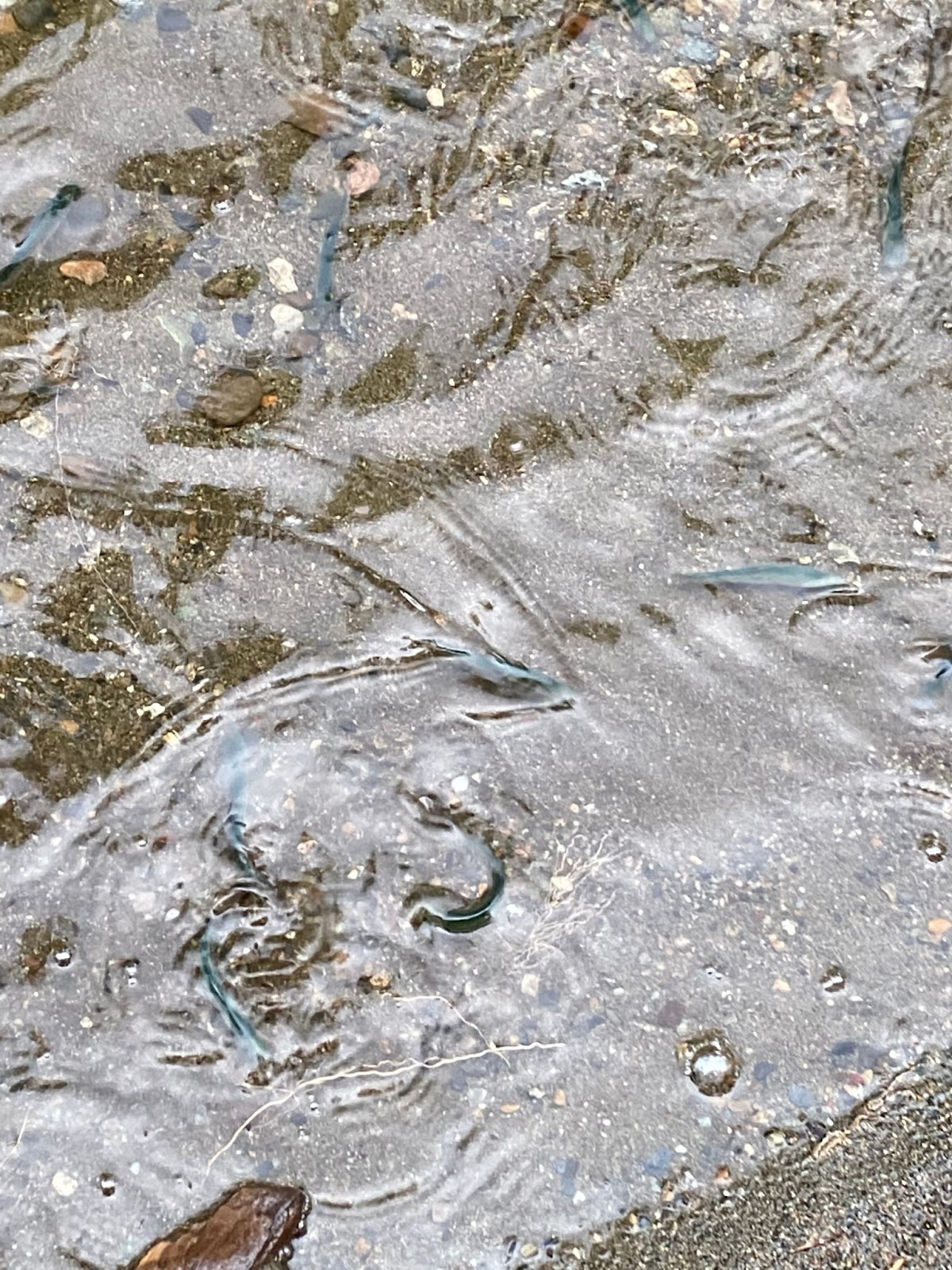
(Unceded Territory of Lheidli T’enneh First Nations – July 6, 2021) After over 10 years of low returns for the Early Stuart sockeye salmon run, hope may finally be on the horizon for a resurgence. With the aid of Fisheries and Oceans Canada (DFO), Inch Creek Hatchery, and the Takla and Tlazt’en First Nations, 60,000 sockeye smolts were released on June 8 in Gluskie Creek to help rebuild the salmon population.

Sockeye smolts released in Gluskie Creek

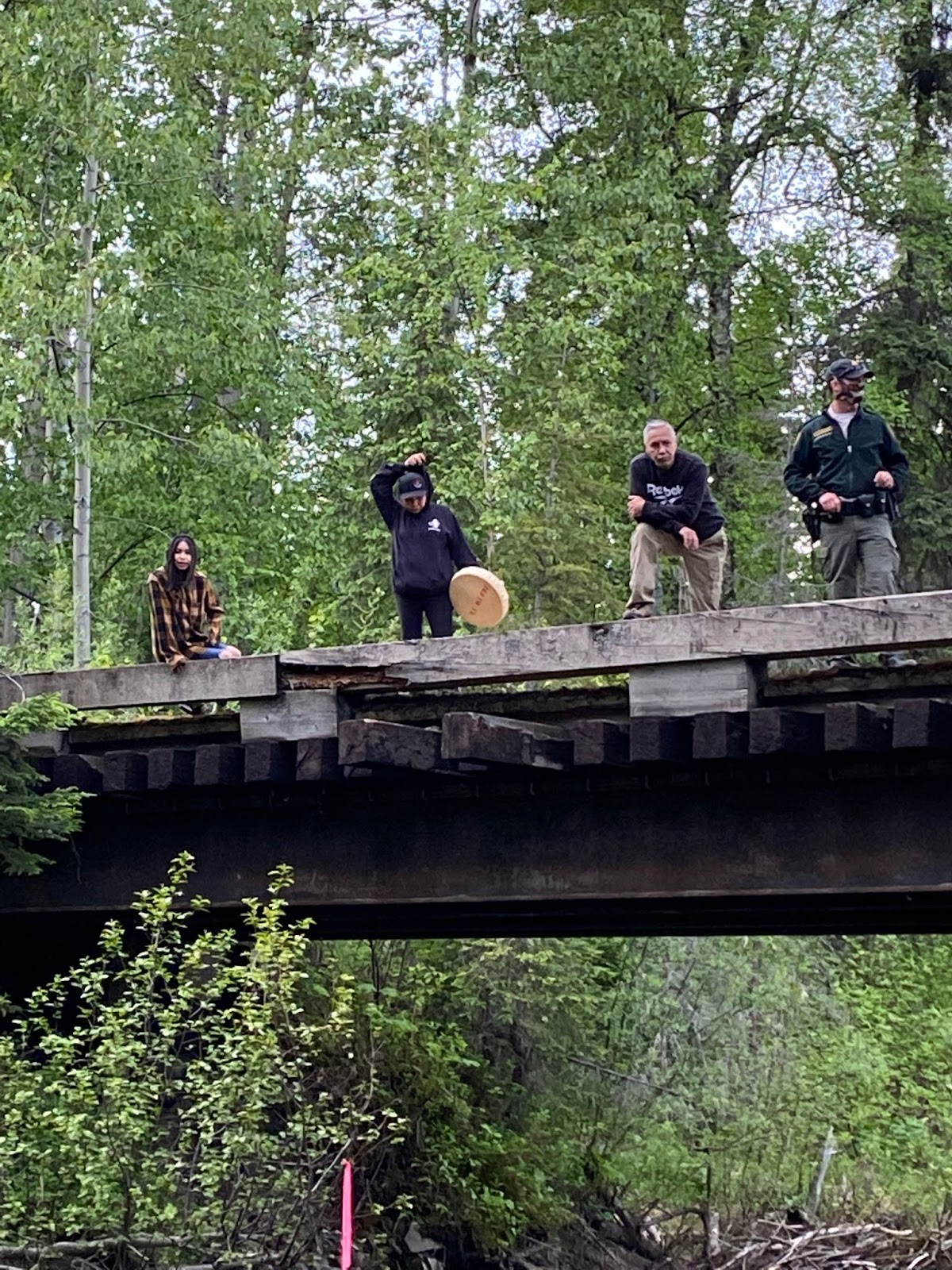
While the Early Stuart sockeye run has been low for over a decade, the Big Bar landslide in 2019 further endangered the species’ migration routes and population. This encouraged the Big Bar Landslide Response Team, a collaboration of DFO, The Province and First Nations, to team up with Inch Creek Hatchery and First Nations Groups from the Spawning grounds to help improve the population. Over 60,000 eggs were taken, fertilized, hatched and raised at the Inch Creek Hatchery in Dewdney, B.C. Once the smolts had reached 10 months of age, Inch Creek Hatchery brought the smolts up to Middle River to release the fish at Gluskie Creek. Representatives from Takla Lake First Nation, Tl’azt’en Nation, CSTC and DFO attended the release.

Kayleigh Patrick, Kimberely Alec, and John Alec Sr. looking over the release with DFO officer Kevin Laarman

The hope is that a portion of these 60,000 smolts will return in 3 years as full-sized salmon to breed and help raise the fish population. With easier passage through Big Bar, good ocean conditions and the right environmental conditions during migration, we should see an increase in the fish population for years to come.

Show more Show Less

Statement From the Tribal Chief in Response to Discovery of 215 Children’s Remains at the Site of the Former Kamloops Indian Residential School

If you are in need of counselling support, the IRSS Emergency Crisis line is available 24/7. Call 1-800-721-0066 for support.

Carrier Sekani Tribal Council is devastated to learn that the remains of 215 children were discovered buried on the site of the former Kamloops Indian Residential School last weekend.

This Thursday, May 27, the Tk’emlúps te Secwépemc band confirmed the remains were found with the help of a ground-penetrating radar specialist. Work is still being done on the site to potentially find more remains.

Some of our people spent their childhoods at this school, which closed in 1969, and it is possible our own members are among the unidentified remains found there last weekend. This is a painful reminder of an unspeakable injustice on our people through the Residential School System that aimed to erase us from our land and from history.

These 215 lives ended in childhood were the result of an act of colonial violence and genocide; we will never know who these children would have become to us.

We as Carrier Sekani First Nations must say a prayer for much needed healing and to honour the children who were forcibly separated from their families before having their lives taken from them too soon.

As a community, we will never forget the atrocities done to our people, but we have the strength of many to heal and pray together. We are reminded to also ask for healing for those who still carry the scars of Residential School today.

Our hearts are with the Tk’emlúps te Secwépemc band as we spend time this weekend reflecting on this horrifying discovery.

With great sadness,

Mina Holmes,

Tribal Chief, Carrier Sekani Tribal Council

Show more Show Less
  • Children and Youth
  • Climate Change
  • Community outreach
  • Elders
  • Events
  • Fisheries
  • Forestry
  • G2G
  • International
  • Job Posting
  • Mining and Energy
  • Missing Women
  • News
  • Oil and Gas
  • Title and Rights
  • White Sturgeon
  • word of the day
  • « Go to Previous Page
  • Page 1
  • Page 2
  • Page 3
  • Page 4
  • Page 5
  • Interim pages omitted …
  • Page 15
  • Go to Next Page »

Suite 200 - 1460 6th Avenue
Prince George, BC
V2L 3N2

Phone (250) 562-6279
Fax (250) 562-8206
officeassistant@cstc.bc.ca
generalmanager@cstc.bc.ca

Facebook